Choosing the right business structure is crucial for entrepreneurs embarking on their journey. The decisions you make now can have lasting impacts on your operations, taxes, and personal liability. Ready to dive into the essentials?
What You Will Learn
Limited Liability Companies (LLCs) offer flexibility in management and taxation while providing personal liability protection.
Corporations provide strong liability protection and potential tax advantages but require more regulatory compliance.
Partnerships involve shared profits and liabilities, with varying personal risk depending on the partnership type.
Liability, taxation, and administration are key factors to consider when choosing the right business structure for your goals.
Comparing Business Structures: LLCs, Corporations, and Partnerships
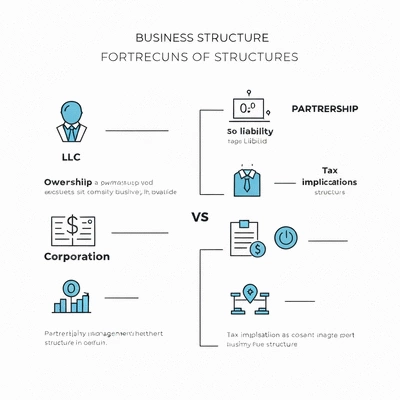
Understanding the fundamental differences between LLCs, Corporations, and Partnerships is crucial for any aspiring entrepreneur. This comparison highlights key aspects such as liability, taxation, and administrative burden.
Limited Liability Company (LLC)
Liability: Personal assets protected from business debts/lawsuits.
Taxation: Pass-through taxation (profits/losses on owner's personal tax return).
Administration: Flexible; minimal regulatory compliance compared to corporations.
Ideal for small businesses seeking protection & flexibility.
Corporation (C-Corp/S-Corp)
Liability: Strongest personal liability protection.
Taxation: Separate entity (C-Corp double taxation); S-Corp pass-through.
Administration: Most complex; significant regulatory compliance & paperwork.
Suited for growth, investment, and formal structure.
Partnership (General/Limited)
Liability: General partners have unlimited personal liability; limited partners have limited liability.
Taxation: Pass-through taxation; profits/losses reported on personal returns.
Administration: Relatively simple to set up; partnership agreement is crucial.
Good for collaborations sharing profits and liabilities.
Key Considerations Flow
1
Evaluate your Liability risk tolerance.
2
Understand Taxation implications for each structure.
3
Assess Administrative burden and compliance.
Align choice with business goals and resources.
Understanding Business Formation: Choosing the Right Structure
Starting a business is an exciting journey, and one of the first steps is choosing the right structure. This decision can significantly impact your operations, taxes, and personal liability. The three main business structures to consider are Limited Liability Companies (LLCs), Corporations, and Partnerships. Each has its own distinct features and benefits, making it essential for new entrepreneurs to understand their options. You can find comprehensive government guidance on choosing a business structure from the Small Business Administration (SBA).
Understanding these business structures is crucial because it lays the foundation for your business's legal and financial framework. It can shape how profits are distributed, how much you’ll pay in taxes, and how much personal risk you take on. So let’s dive deeper into what each structure entails! The IRS also provides valuable resources on business structures, particularly concerning tax implications.
Introduction to Business Structures: LLC, Corporation, and Partnership
Limited Liability Company (LLC): Combines the flexibility of a partnership with the liability protection of a corporation.
Corporation: A more complex structure that offers strong liability protection and potential tax advantages, but requires more regulatory compliance.
Partnership: Involves two or more individuals who share the business's profits and liabilities, with varying degrees of personal risk depending on the type of partnership.
Each of these structures comes with its own set of advantages and challenges. It’s vital to align the choice of structure with your business goals and needs. As someone deeply invested in helping individuals navigate their legal challenges, I encourage you to think critically about these options!
Key Considerations in Business Formation
When it comes to choosing a business structure, there are several key factors to consider. These include:
Liability: How much personal risk are you willing to take on? Different structures offer varying levels of protection.
Taxation: Each structure is taxed differently, which can affect your bottom line in significant ways. The IRS has a detailed publication on S corporation facts that can be particularly helpful for those considering that corporate structure.
Administration: Some structures require more compliance and paperwork than others, impacting your time and resources.
Carefully weighing these factors will guide you towards the business structure that best fits your vision. At E Lawyers Near Me, we understand that navigating the complexities of legal structures can be overwhelming, but you don’t have to do it alone!
Detailed Comparison of Business Structures
Exploring Limited Liability Companies (LLCs)
Limited Liability Companies, or LLCs, are popular among new business owners for many reasons. They provide a great mix of simplicity and protection. An LLC not only limits your personal liability but also offers flexibility in management and taxation. However, like any entity, it has its own advantages and disadvantages.
Liability Protection and Tax Benefits of LLCs
One of the most significant benefits of forming an LLC is the liability protection it offers. This means your personal assets are generally safe from business debts and lawsuits. Additionally, LLCs can benefit from pass-through taxation, which can simplify things at tax time. However, it’s essential to maintain proper business practices to uphold this protection.
Frequently Asked Questions (FAQs)
What are the main business structures for entrepreneurs?
The three main business structures discussed are Limited Liability Companies (LLCs), Corporations (C-Corp/S-Corp), and Partnerships (General/Limited).
What is the primary advantage of an LLC?
LLCs offer personal liability protection, meaning your personal assets are generally safe from business debts and lawsuits, while also providing flexibility in management and taxation.
How do Corporations differ from LLCs in terms of liability and administration?
Corporations offer the strongest personal liability protection but are generally more complex to administer, requiring significant regulatory compliance and paperwork compared to LLCs.
What are the tax implications for each business structure?
LLCs and Partnerships typically have pass-through taxation, where profits and losses are reported on the owner's personal tax return. C-Corporations face double taxation (corporate and individual income tax), while S-Corporations offer pass-through taxation similar to LLCs.
What key factors should I consider when choosing a business structure?
When choosing a business structure, you should consider your personal liability risk tolerance, the taxation implications for each structure, and the administrative burden and compliance requirements.
Is a Partnership a good option for collaborations?
Yes, Partnerships are well-suited for collaborations where individuals share profits and liabilities. However, general partners typically have unlimited personal liability, while limited partners have limited liability.
Where can I find more information about choosing a business structure and its tax implications?
You can find comprehensive guidance from the Small Business Administration (SBA) and detailed resources on business structures and tax implications from the Internal Revenue Service (IRS).
We Want to Hear From You!
What do you think about the importance of choosing the right business structure? Share your thoughts below:
Wrapping Up Your Business Formation Journey
Summary of Key Differences and Considerations
As we wrap up this exploration of business structures, it's vital to highlight the key differences between LLCs, corporations, and partnerships. Each structure has its unique traits that cater to various business needs:
LLCs offer flexibility and protection for personal assets, making them ideal for small businesses.
Corporations provide opportunities for growth and investment but come with more regulatory requirements.
Partnerships are great for collaboration but can expose partners to shared liability.
Understanding these distinctions is crucial for entrepreneurs looking to choose the right structure that aligns with their goals. As I always say, the choice you make now can significantly impact your business's future. So, consider your specific needs carefully!
Next Steps for Aspiring Entrepreneurs
Now that you have a solid grasp of the different business structures, it’s time to take the next steps. Reflect on your business objectives and think about how they align with the options we discussed. Here are some actionable steps to consider:
Evaluate your business goals and the structure that best supports them.
Research the specific rules and regulations in your state regarding business formation.
Download the resources we've provided to streamline your decision-making process.
Feeling a bit overwhelmed? That’s completely normal! Starting your business journey can be challenging, but it’s important to take it one step at a time. I encourage you to consult with a legal professional to get personalized guidance tailored to your unique situation. Having the right support can make a big difference!
So, what are you waiting for? Dive into your business formation journey and embrace the exciting opportunities ahead! Don’t forget to check out our resources at E Lawyers Near Me for quick connections to trusted legal professionals who can help you every step of the way!
Recap of Key Points
Here is a quick recap of the important points discussed in the article:
Business Structures: Understand the differences between LLCs, Corporations, and Partnerships to find the best fit for your business.
Key Considerations: Assess liability, taxation, and administrative requirements when choosing your business structure.
LLC Advantages: LLCs offer a blend of flexibility and liability protection, making them suitable for small businesses.
Corporation Overview: Corporations provide strong liability protection but involve more regulatory compliance.
Partnership Insights: Partnerships are beneficial for collaboration but come with shared liability risks.
Next Steps: Reflect on your business objectives and research regulations in your state to make informed decisions.
At E Lawyers Near Me, we are dedicated to simplifying access to justice. Our mission is to connect individuals with trusted local attorneys and provide instant online legal consultations, empowering you to navigate legal challenges with confidence.






Budgeting for Immigration Legal Services
Understanding Criminal Defense Strategies
Navigating Grandparent Rights Legally
Safeguarding Property Rights in Disputes
Tips for Effective Business Agreements