
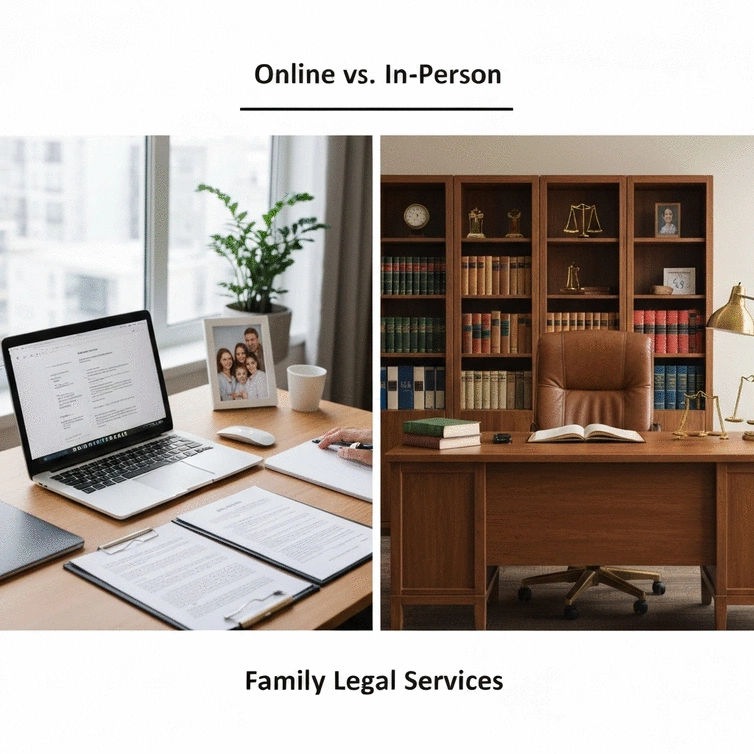
Family Legal Services: Online or In-Person?
Choosing between online and in-person family legal services can feel overwhelming. As you navigate this critical decision, understanding the unique benefits and challenges of each option is essential for your family's legal journey. Here's what you will learn about making an informed choice.
What You Will Learn
- Online family legal services offer unparalleled convenience, allowing for immediate consultations without travel constraints.
- In-person consultations foster stronger emotional connections, crucial for discussing sensitive family matters.
- Geographic accessibility of online services means you can connect with specialized attorneys regardless of your location.
- Consider comfort levels; some may prefer face-to-face interactions for building trust and rapport with their attorney.
- Cost-effectiveness of online services can reduce overall legal expenses, making them an attractive option for budget-conscious families.
- Emotional disconnect is a potential downside of online services, as non-verbal cues can be lost during virtual communication.
Comparing Online vs. In-Person Family Legal Services
Understanding the key differences between online and in-person family legal services can help you make an informed decision based on your unique needs. Below is a comparison of their primary characteristics.
Online Services
- ✓ Convenience: Access anytime, anywhere; skip commute.
- ✓ Cost-Effective: Often lower rates, reduced travel costs.
- ✓ Geographic Accessibility: Connect with experts beyond local limits.
- ⚠ Emotional Disconnect: Lack of non-verbal cues, potential for miscommunication.
- ⚠ Limited Personal Connection: Harder to build rapport for some.
In-Person Services
- ✓ Face-to-Face Interaction: Enhances trust and understanding.
- ✓ Emotional Support: Direct interaction can alleviate anxiety.
- ✓ Stronger Rapport: Easier to build a trusting relationship.
- ⚠ Logistical Issues: Requires travel, adherence to office hours.
- ⚠ Less Flexible Scheduling: May be harder to fit into busy routines.
Understanding Online vs. In-Person Family Legal Services
When it comes to navigating family legal issues, one of the first decisions you'll face is whether to seek online or in-person family legal services. Each option presents unique advantages and challenges, and understanding these can help you make an informed choice. Factors such as convenience and accessibility play a crucial role in this decision, especially in the context of today’s fast-paced world. For families seeking cost-effective or free legal assistance, resources like the American Bar Association's Free Legal Help or LawHelp.org can be incredibly valuable.
For many families, the option to connect with legal professionals online provides an immediate solution that can fit into their busy schedules. On the other hand, some may feel more comfortable discussing sensitive issues face-to-face, especially when considering self-help resources for legal matters. Let’s explore what to consider when choosing between these two types of services.
What to Consider When Choosing Family Legal Services
Here are several factors to take into account when deciding on family legal services:
- Convenience: Online services often allow for consultations from the comfort of your home, while in-person meetings may require travel.
- Accessibility: Consider if you have easy access to local attorneys or if online options may provide the expertise you need without geographic limitations.
- Comfort Level: Reflect on whether you feel more secure in a digital environment or if face-to-face interactions are essential for discussing personal matters.
- Cost: Online services can sometimes reduce costs associated with travel and office visits, making them a more budget-friendly option.
Ultimately, the decision should align with what feels right for you and your family. Remember, at E Lawyers Near Me, our goal is to provide you with the resources to connect with the right legal representation based on your unique situation!
Evaluating the Benefits of Online Family Legal Services
Online family legal services have gained popularity for a number of reasons. They can be a game-changer for busy families seeking immediate assistance without compromising their daily routines. Let’s delve into some specific benefits that make online services appealing.
Convenience and Cost-Effectiveness of Online Services
One of the biggest advantages of online legal services is their convenience. You can access legal advice anytime and anywhere. This flexibility means you can fit consultations around your schedule without worrying about travel time or logistics.
- Time Savings: Skip the commute and connect from home.
- Cost-Effective: Many online services offer competitive rates, which can reduce overall legal costs.
- Quick Access: Get immediate answers and support at your fingertips.
With these factors in mind, it's clear that online legal services can save not only time but also money, making them an attractive option for many families!
Scheduling Flexibility and Geographic Accessibility
Another major benefit of online family legal services is the geographic accessibility. By utilizing virtual consultations, you can connect with legal experts who specialize in your specific needs, regardless of where they are located. This opens up a world of options that may not be available in your local area.
- Flexible Scheduling: Book appointments that fit your timetable, including evenings and weekends.
- No Geographic Barriers: Access top-notch legal expertise without being limited to your local options.
- Convenient Follow-ups: Easily schedule follow-up meetings as needed.
This level of flexibility makes it easier for families to get the legal assistance they require without the hassle of traditional office hours.
Understanding the Emotional Disconnect in Online Settings
However, while there are several advantages to online services, it’s essential to consider the potential downsides. One downside is the emotional disconnect that can occur during virtual interactions. In sensitive family matters, non-verbal cues often play a vital role in communication.
- Lack of Non-Verbal Communication: Body language and facial expressions can be lost in online formats.
- Limited Personal Connection: Some clients may find it hard to build rapport with their attorney without in-person interaction.
- Potential for Miscommunication: Tone and intent may be misinterpreted in written communications.
Recognizing these limitations is crucial in choosing the right path for your family’s legal needs. At E Lawyers Near Me, we encourage you to weigh these aspects carefully as you navigate your options!
Exploring the Pros of In-Person Family Legal Services
While online services have their advantages, in-person family legal services also hold significant value, particularly in establishing personal connections during sensitive matters. Let’s take a closer look at the benefits of meeting face-to-face.
The Value of Face-to-Face Interaction in Family Law
When dealing with complex family issues, in-person consultations can provide a sense of comfort and assurance. The personal connection fostered during these meetings can enhance trust and understanding.
- Direct Interaction: Engage fully in discussions with your attorney, allowing for more dynamic conversations.
- Emotional Support: A personal touch can help alleviate anxiety, especially in challenging legal situations.
- Stronger Rapport: Build a trusting relationship that can be crucial in sensitive family matters.
These face-to-face interactions often prove invaluable, particularly when navigating emotional circumstances.
Empathy and Trust-Building Through Personal Engagement
In-person meetings allow for deeper empathy and understanding. When discussing matters like mediation or custody, being present can create a supportive atmosphere that helps clients feel valued and heard.
- Immediate Feedback: Attorneys can respond to emotional cues in real-time, providing reassurance.
- Enhanced Communication: Non-verbal cues enhance understanding and clarity.
- Trust Development: Establishing a personal connection can build long-lasting trust.
In family law, where emotions run high, these elements can significantly impact the effectiveness of the legal process.
Frequently Asked Questions About Family Legal Services
Here are some common questions to help you further understand online and in-person family legal services:
- What are the main advantages of online family legal services?
Online services offer convenience, cost-effectiveness, and geographic accessibility, allowing you to connect with legal experts from anywhere without travel constraints. - Why might someone prefer in-person family legal services?
In-person services facilitate face-to-face interaction, which can enhance trust, provide emotional support, and build stronger rapport, especially crucial for sensitive family matters. - What is "emotional disconnect" in the context of online legal services?
Emotional disconnect refers to the potential loss of non-verbal cues (like body language and facial expressions) in virtual interactions, which can sometimes lead to miscommunication or make it harder to build a personal connection with an attorney. - Are online family legal services generally more affordable than in-person services?
Often, yes. Online services can reduce overall legal expenses due to lower overheads, reduced travel costs for clients, and sometimes competitive rates offered by online platforms. - How does geographic accessibility benefit families seeking legal help?
Geographic accessibility means you are not limited to attorneys in your immediate vicinity. You can access specialized legal expertise regardless of location, potentially finding a better match for your specific needs.
We Want to Hear From You!
As you consider the best legal service format for your family, we’d love to know your thoughts! What factors matter most to you when choosing between online and in-person legal services? Share your opinion below:
Summarizing the Key Insights on Family Legal Service Formats
When it comes to choosing between online and in-person family legal services, understanding the pros and cons is crucial. Here’s a recap of the main points to consider:
- Online Services: Convenient and often more affordable, online services allow for quick access to legal expertise without geographical limitations.
- In-Person Services: Offer face-to-face interaction, fostering trust and empathy, which can be vital for sensitive family matters.
- Emotional Disconnect: Online formats might lack the personal touch that in-person meetings provide, affecting the emotional connection.
- Logistical Issues: In-person consultations can involve travel and scheduling challenges, which might not always be feasible for families in need.
Each option has its unique advantages, and the key takeaway is to assess what fits best with your family’s specific legal needs!
Making Informed Decisions for Your Family's Legal Needs
As you navigate your family’s legal challenges, it’s important to weigh your options carefully. Consider factors like convenience, emotional connection, and accessibility when deciding between online and in-person legal services. Each format has distinct benefits that cater to different situations, and understanding these can help you make a more informed choice.
Don’t forget to reflect on your family’s unique circumstances and preferences. Whether you feel more comfortable discussing matters in person or prefer the flexibility of online consultations, there’s no one-size-fits-all solution!
Call to Action: Consulting Legal Experts for Tailored Advice
If you’re feeling uncertain about which legal format is right for you, I invite you to reach out to us at E Lawyers Near Me. We specialize in connecting families with experienced legal professionals who can provide personalized consultations tailored to your specific needs. Let’s work together to find the best approach for your family legal issues!
Recap of Key Points
Here is a quick recap of the important points discussed in the article:
- Convenience: Online services offer flexibility and can fit into busy schedules, while in-person services provide direct interaction.
- Accessibility: Online options eliminate geographic limitations, allowing families to connect with specialized legal professionals.
- Emotional Connection: In-person meetings foster trust and empathy, which can be crucial for sensitive family matters.
- Cost-Effectiveness: Online services can be more affordable, reducing costs related to travel and office visits.
- Potential Downsides: Online formats may lead to emotional disconnect and miscommunication due to the lack of non-verbal cues.




Budgeting for Immigration Legal Services
Understanding Criminal Defense Strategies
Navigating Grandparent Rights Legally
Safeguarding Property Rights in Disputes
Tips for Effective Business Agreements